
Walk into any pharmacy in Lahore or Karachi and you’ll find a wall of multivitamins, most of them local brands with vague labeling and no real way to check what you’re actually swallowing every morning. That’s the exact problem more Pakistani buyers are trying to solve by looking specifically at imported, well-documented supplements instead — products where the label tells you the real dose, the sourcing is traceable, and the brand has an actual track record rather than just a catchy bottle.
This list isn’t a random top-five pulled out of thin air. It’s built around five products that consistently come up for different, legitimate reasons: one is the household name people already trust, one is the clean-label pick for people who read ingredient panels closely, one is the budget-friendly workhorse, one is the single-ingredient supplement that solves a specific problem better than any multivitamin can, and one covers a gap most multivitamins ignore entirely — gut health. Together, they cover most of what an average adult in Pakistan is actually looking for when they type “best multivitamins” into a search bar.
1. Centrum Silver 50+ (Men and Women)
Centrum is probably the most recognized multivitamin name in Pakistan, and a large part of that recognition comes from people who’ve either used it while living abroad or had it recommended directly by a doctor. The Centrum Silver 50+ line specifically is built for adults past fifty, which matters because nutritional needs genuinely shift with age — appetite often drops, absorption of certain nutrients slows down, and the risk of dietary gaps widens, especially if meals have become smaller or less varied.


What separates this from a generic all-ages multivitamin is that Centrum splits the formula by gender. Men’s and women’s nutritional requirements at fifty-plus aren’t identical, and Centrum accounts for that rather than offering one blanket formula for everyone. For families in Pakistan managing supplements for aging parents, this distinction is one of the more practical reasons the product gets specifically requested by name rather than substituted with “any multivitamin.”
Why It Makes This List
- A long, well-established track record rather than a newer, unproven brand
- Age-specific formulation rather than a one-size-fits-all approach
- Separate men’s and women’s versions reflecting different nutrient needs at this life stage
- Widely recommended by doctors, which builds a level of trust that’s hard to manufacture through marketing alone
Who It’s Best For
Adults over fifty, or families sourcing a reliable multivitamin for aging parents who may already be managing other health conditions and want something backed by a known name rather than an unfamiliar brand.
There’s also a practical reason this brand tops most lists: it’s easy to find dosage and ingredient information for Centrum online, in multiple languages, from the manufacturer’s own resources — something that isn’t always true for lesser-known brands. For a first-time buyer trying to explain a supplement choice to an elderly parent who’s skeptical of “foreign vitamins,” having a name they may already recognize from a pharmacy abroad or a relative’s recommendation goes a long way toward actually getting them to take it consistently.
2. Thorne Multivitamins
Thorne multivitamins sits at the opposite end of the spectrum from a mass-market brand — it’s the pick for people who’ve already started reading supplement labels closely and specifically look for fewer fillers, cleaner ingredient sourcing, and formulas that avoid unnecessary additives. It’s not a brand most people stumble onto by accident in Pakistan; it’s usually requested by name after someone has done their own research or had it recommended within health-focused circles.


The appeal isn’t flashy. Thorne doesn’t lean on aggressive marketing the way some supplement brands do. Its reputation is built almost entirely on formulation quality and the kind of testing rigor that practitioners abroad have come to trust. For a Pakistani buyer who’s tried a few local or lower-tier imported multivitamins and felt unconvinced by the ingredient list, Thorne is usually the next step up.
Why It Makes This List
- Cleaner formulations with fewer artificial binders and fillers
- A brand with a strong reputation among practitioners internationally, not just consumer marketing
- Multiple targeted formulas beyond just the basic multivitamin, useful if specific gaps need addressing later
- Appeals to buyers who genuinely read and compare ingredient panels before purchasing
Who It’s Best For
Buyers who’ve already used multivitamins before and want to step up to a more research-backed, clean-label option, even at a higher price point.
It’s also worth noting that Thorne isn’t a single product — the brand covers a wide catalog beyond its multivitamin line, including targeted B-complex, vitamin D, and mineral formulas. That’s useful for someone in Pakistan who starts with the basic multivitamin, realizes they have a specific gap a few months in, and wants to add something from a brand they already trust rather than switching to an entirely different company mid-routine.
3. NOW Multivitamin for Men and Women
NOW Foods has built its name on being dependable without being expensive, and that’s exactly the gap it fills on this list. Not everyone wants to spend premium money every month on a multivitamin, and NOW’s gender-specific formulas offer a solid, well-rounded option without the price tag of a boutique brand. It’s a practical middle ground — better documented and more transparent than most local alternatives, but priced in a way that makes daily use sustainable for a wider range of buyers in Pakistan.


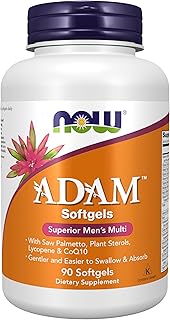

Like Centrum, NOW Multivitamins splits its multivitamin line by gender, recognizing that men’s and women’s needs — particularly around iron — aren’t the same. Women generally need more iron due to menstrual loss, while men’s formulas typically skip or minimize it, since excess iron isn’t something most men need to be supplementing.
Why It Makes This List
- A dependable, mid-priced option that doesn’t sacrifice basic quality standards
- Gender-specific formulation addressing different iron and nutrient needs
- Broad enough nutrient coverage for everyday use without an overly complicated ingredient list
- Consistent availability and a brand that’s easy to source authentically when bought through the right channel
Who It’s Best For
Anyone wanting a reliable daily multivitamin without paying premium prices — a good starting point for someone new to supplementing consistently.
This is often the multivitamin people settle into for the long haul, precisely because the price makes daily use feel sustainable rather than something to ration out or take only “when needed.” A supplement that gets skipped half the month because it feels too expensive to use consistently isn’t really doing its job, and NOW’s positioning solves that problem directly for a lot of households in Pakistan managing multiple family members’ supplement needs at once.
4. Magnesium Glycinate
This is the one item on the list that isn’t a multivitamin at all, and it’s here because a single-ingredient supplement sometimes does more for a specific problem than any multivitamin blend can. Magnesium glycinate has become one of the most searched supplement terms in Pakistan for a simple reason — a huge number of people dealing with poor sleep, muscle tightness, or constant low-grade stress try magnesium at some point, and glycinate is the form that tends to actually agree with their stomach.


Most multivitamins include some magnesium, but rarely enough to make a noticeable difference — the mineral takes up too much physical space to fit a meaningful dose into a multivitamin tablet alongside everything else. That’s exactly why people end up adding a standalone magnesium glycinate supplement on top of their regular multivitamin rather than expecting the multivitamin alone to cover it.
Why It Makes This List
- Addresses sleep, muscle tension, and everyday stress more directly than a general multivitamin
- The glycinate form is notably gentler on digestion compared to cheaper magnesium oxide
- Fills a gap that multivitamins structurally can’t cover due to dosing limitations
- Useful as an add-on rather than a replacement for a daily multivitamin
Who It’s Best For
People dealing with restless sleep, tension, or stress who’ve already got their general nutrient bases covered and are looking to address something more specific.
It’s also worth mentioning why the “glycinate” part of the name matters so much. Cheaper magnesium oxide is common in local pharmacies because it’s inexpensive to produce, but a large percentage of it passes through the digestive system without being absorbed, and it’s known for causing loose stools at higher doses. Glycinate avoids most of that problem, which is exactly why it’s become the version people specifically ask for once they’ve tried the cheaper alternative and found it didn’t sit well.
5. Probiotic 5 Billion CFU
No multivitamin touches gut health, and that’s the gap this one closes. A Probiotic 5 billion CFU is a comfortable, moderate dose — enough live cultures to be meaningful without jumping straight to a 50 billion CFU formula that a lot of first-time users don’t actually need. It’s a common starting point for people in Pakistan trying probiotics for the first time, whether that’s for general digestion, recovering gut balance after a course of antibiotics, or simply supporting overall digestive comfort.


What makes this category worth including here rather than treating it as a niche add-on is how often digestive discomfort shows up as an unaddressed, background issue for people who are otherwise doing everything else right — eating reasonably, taking their multivitamin, staying active — but still deal with bloating or irregularity that a multivitamin was never going to fix in the first place.
Why It Makes This List
- Covers a category — gut health — that no multivitamin addresses
- A moderate 5 billion CFU dose is approachable for first-time probiotic users
- Often used after antibiotics to help support the gut’s bacterial balance
- Shelf-stable formulas are available, which matters for storage in Pakistan’s climate
Who It’s Best For
Anyone dealing with occasional bloating or digestive irregularity, or those looking to support gut health after antibiotics, especially if they’re new to probiotics and don’t want to start with an unnecessarily high CFU count.
One detail that trips people up: not every probiotic needs refrigeration, but not every probiotic doesn’t either — it genuinely depends on the specific strain and how the manufacturer stabilized it. This matters more in Pakistan than in cooler climates, since a probiotic that’s meant to be refrigerated but gets left in a hot delivery van for days may not have many live cultures left by the time it reaches you. Checking the label for storage instructions before buying, rather than after, saves a wasted purchase.
How These Five Work Together
None of these five are meant to be taken as a single all-in-one stack by default — that’s actually a common mistake. The more realistic approach is to pick a base multivitamin first (Centrum, Thorne, or NOW, depending on budget and how closely you read labels), and then layer in magnesium glycinate or a probiotic only if you have a specific issue those particular supplements are known to help with, like poor sleep or digestive discomfort. Doubling up on a full multivitamin alongside a second full multivitamin is rarely useful and can lead to excess intake of certain vitamins and minerals, so the goal is complementary coverage, not stacking everything at once.
A simple way to think about it: the multivitamin is your baseline, covering the broad nutritional gaps that come from an imperfect diet. Magnesium glycinate and the probiotic are situational — you add them because of a specific symptom, not because they’re generically “good for you.” If neither poor sleep nor digestive discomfort is something you’re actually dealing with, there’s no strong reason to add either one just because they’re on this list. Supplementing works best when it responds to something real rather than being taken on the assumption that more is automatically better.
Timing also matters more than people expect. Multivitamins are generally better absorbed with food, since several of the vitamins they contain are fat-soluble and need some dietary fat present to be used properly. Magnesium glycinate is commonly taken in the evening given its association with winding down, though this isn’t a strict rule — some people simply take it with their other supplements in the morning and still notice a benefit by nighttime. Probiotics are more flexible, though taking them consistently at roughly the same time each day tends to make it easier to stick with the habit long enough to actually notice a difference.
Buying Guide: How to Choose Between Them
- Budget-conscious daily use: NOW Multivitamin is the most sustainable long-term option without cutting corners on basic quality
- Age 50 and above: Centrum Silver 50+ remains the more targeted, age-specific choice
- Prefer minimal fillers and cleaner labels: Thorne is worth the higher price if that matters to you
- Struggling with sleep or muscle tension: Add magnesium glycinate on top of whichever multivitamin you’re already using
- Dealing with digestive discomfort: A 5 billion CFU probiotic is a reasonable, moderate starting point
Whichever you choose, sourcing matters as much as the product itself. Multivitamins and supplements are among the most commonly counterfeited or repackaged health products in South Asian markets, particularly well-known names like Centrum and Thorne. Buying from a source that imports directly, keeps original sealed packaging, and shows visible batch and expiry information reduces that risk significantly — something worth checking regardless of which of these five you decide on.
Frequently Asked Questions
Can I take more than one of these together?
Generally yes, but avoid combining two full multivitamins at once. A single multivitamin paired with a targeted supplement like magnesium or a probiotic is a more sensible combination than stacking multiple all-in-one formulas.
Which one should a complete beginner start with?
A general multivitamin like NOW or Centrum is usually the right starting point, since it covers broad nutritional gaps before you consider adding something more targeted like magnesium or a probiotic.
Do I need a doctor’s advice before starting any of these?
If you’re on prescription medication, pregnant, or managing an existing health condition, it’s worth checking with a doctor first, since some supplements can interact with medications or aren’t appropriate for every situation.
How do I know if the product I’m buying is genuine and not counterfeit?
Check that the packaging is sealed, the batch number and expiry are clearly printed, and that you’re buying from a source that imports directly rather than an unverified reseller.
Is it better to buy these individually or as a bundle?
It depends on your actual needs — buying individually lets you choose only what addresses your specific gaps, rather than paying for a bundle that may include something you don’t need.